 Stationhand
Guides · Getting started
How to start an internet radio station in the UK
Everything you need to get an online station on air legally – the licences (and the one you don't need), the kit, the music, the schedule and finding listeners – with real costs.
Key points
- You don't need an Ofcom licence for an online-only station – Ofcom doesn't regulate them. That changes if you ever go on FM or DAB.
- You do need music licences: PPL (for the recordings) and PRS for Music (for the songs). For a small station that's roughly £400 a year plus VAT between them.
- The kit can be modest: a computer, radio automation software, a stream server or streaming host, and a decent microphone and headphones.
- Plan the boring bits early: a tidy music library, a schedule, and the listener figures your licences ask you to report.
1. Decide what your station is
Before any equipment, answer three questions – they shape every decision after:
- Who's it for? A town, a scene, a genre, a community, an age group. "Everyone" isn't an audience.
- What does it sound like? The kind of music, how much talk, and how polished.
- How much is live? A few live shows a week and automation the rest of the time is the usual pattern for a small station. Be honest about how many hours your presenters can really give.
2. Get the right licences
This is the part people skip, and the part that matters most.
Ofcom: not needed for online-only stations
Ofcom licenses stations that broadcast over the air, on FM, AM and DAB. It doesn't regulate online-only radio services, and says these stations "do not require a licence from Ofcom" (Ofcom: radio broadcast licences). The general law still applies to what you say on air, of course.
Music: PPL and PRS for Music
If you play music, you need two licences, because a song has two sets of rights:
- PPL licenses the recordings – on behalf of record labels and performers. For online stations that's the PPL Linear Webcast Licence.
- PRS for Music licenses the songs themselves – on behalf of songwriters, composers and publishers – through its internet radio licence.
| Licence | Covers | Starting cost | What you report |
|---|---|---|---|
| PPL Linear Webcast Licence | The recordings | £207 + VAT a year (Band 1: up to 150,000 performances a year). Band 2 (to 270,000) is £345; above that, or over £5,000 revenue a year, Band 3 starts at £691. | Total listener hours and average tracks per hour – twice a year in Bands 1 and 2 |
| PRS for Music internet radio licence | The songs (compositions and lyrics) | Around £193 + VAT a year at the time of writing, rising with your listening and revenue | What PRS for Music asks for in your licence terms – typically your usage and the music played |
| Ofcom | – | Not needed for online-only stations | – |
PPL counts a performance as one track heard by one listener: listener hours × average tracks per hour. A station playing 15 tracks an hour reaches Band 1's 150,000 performances at about 10,000 listener hours a year – roughly 27 hours of listening a day.
Check before you budget. PPL's figures are its 2026 prices (PPL: Linear Webcast Licence). PRS for Music sets its fee by how your station is funded and listened to – get a quote from PRS for Music: internet radio licence. A community radio station with a joint PPL and PRS for Music licence is usually already covered for its online simulcast. This guide isn't legal advice.
Things a licence doesn't let you do
- Play music from a streaming service. Personal subscriptions don't allow broadcasting. You need your own copies of the songs.
- Ignore the reports. Your licences depend on sending the figures they ask for. Pick software that keeps them for you.
3. The kit you need
- A computer to run the station – or a hosted radio station. If you run it yourself, it should be on all the time, so a small server or a dedicated PC or Mac beats a laptop that goes home with someone. With radio station cloud hosting, the provider runs the station for you and you use a web browser.
- Radio automation software to play the station, schedule it and keep the records. Our guide to radio automation software explains the choices.
- A stream server – Icecast or SHOUTcast, on your own server or rented from a streaming host – so listeners can hear you. Some software includes this.
- A microphone, headphones and an audio interface for live shows and voice tracking. A decent USB microphone is fine to start; headphones are essential.
- A reliable internet connection where the station runs – upload speed matters more than download.
4. Get your music library right
Your library is your station's sound. Before launch:
- Buy or obtain proper copies of the songs, in good quality.
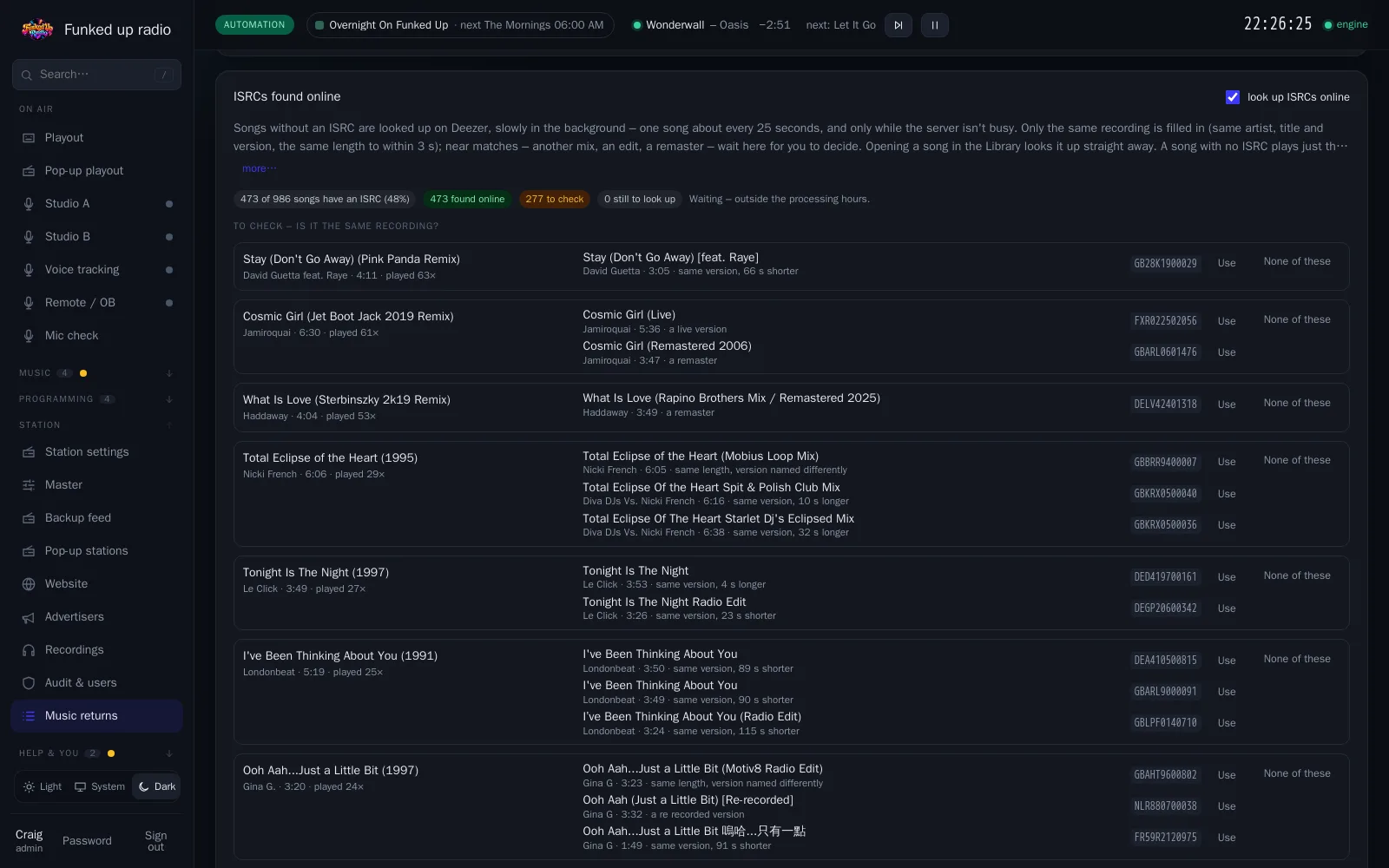
- Fix the titles and artists – they show on listeners' screens and in your licence reports. ISRCs (each recording's identity code) make reporting easier.
- Even out the volume so listeners aren't reaching for the dial between songs. Good automation software measures loudness for you.
- Mark intros and outros so songs join smoothly and links don't talk over singing – again, good software can do this automatically.
5. Build your schedule
Plan your week in blocks: live shows where you have presenters, automation everywhere else. For the automated hours, design a clock – the pattern each hour follows: songs from different categories, station IDs at the top of the hour, adverts or promos at set points. Then set rules so the same artist doesn't come round too often. Voice-tracked shows fill the gaps between automation and live presenting; see voice tracking explained.
6. Find your listeners
- A website with a player that works on phones, and shows what's playing.
- Station directories and apps – TuneIn and the other big directories let stations submit themselves.
- Smart speakers – "play [your station]" works once you're listed in the directories they use.
- Your community – local businesses, clubs, events and social media. Small stations grow person by person.
- Know your audience – listener figures tell you which shows work, and you'll need total listener hours for PPL anyway.
7. What it costs
A realistic first-year budget for a small online station:
| Item | Typical cost |
|---|---|
| PPL and PRS for Music licences | About £400 + VAT a year to start |
| Automation software | From free (open source) to a few hundred pounds, or a monthly subscription |
| Streaming | Free on your own server, or a monthly fee from a host – usually priced by listeners |
| Computer or server | An existing PC, a small server, or a rented one |
| Microphone, headphones, interface | £100–£300 to start |
| Music | Depends on your library – budget for buying what you're missing |
Launch checklist
- Format and audience decided.
- PPL Linear Webcast Licence and PRS for Music internet radio licence in place.
- Music library bought, tidied and levelled.
- Automation software running on a computer that stays on.
- Stream working – tested from a phone on mobile data, not just your own Wi-Fi.
- Clocks and a week's schedule built; overnight hours checked by ear.
- Website and player live; station submitted to directories.
- A plan for reporting listener hours and plays to PPL and PRS for Music.
Questions
Quick answers
Do I need an Ofcom licence for an internet radio station?
No. Ofcom says it doesn't regulate online-only radio services, so they don't need an Ofcom licence. You only need one to broadcast on FM, AM or DAB. You do still need music licences from PPL and PRS for Music.
How much does it cost to start an internet radio station in the UK?
For a small station, the music licences are the main fixed cost – about £400 plus VAT a year for PPL and PRS for Music together at the time of writing. Add software, streaming and some equipment; a modest station can run for a few hundred pounds a year beyond that.
Can I run an internet radio station from home?
Yes. Many stations run on a computer at home, with presenters connecting from their own homes. Keep the station computer on a reliable connection, and have a plan for power cuts and updates.
What reports do PPL and PRS for Music ask for?
PPL's webcast licence asks for your total listener hours and average tracks per hour – twice a year for small stations. PRS for Music sets its reporting in your licence terms, usually your usage and the music played. Software that logs every play and counts listener hours makes this quick.
Can I play music from Spotify or another streaming service?
No. Personal streaming subscriptions don't allow broadcasting. Your station needs its own copies of the songs, plus the PPL and PRS for Music licences.
Stationhand
Ready to get on air?
Stationhand runs internet stations around the clock, from your own computer – and keeps the figures your licences ask for.